CO₂-negative infill blocks for future-proof renovation floors
How can an age-old building principle be adapted to the challenges of the 21st century? According to Masterbloc and Prefer, the answer lies not in a new construction method, but in a new production technology for the elements. By replacing traditional pots with Carbstone elements, a classic beam-and-block renovation floor (also known as joists and infill blocks) suddenly becomes a powerful tool for circular and climate-friendly construction.
Carbstone products distinguish themselves through a radically different composition: they are cement-free and made from steel industry by-products and biogenic CO₂. The Carbstone technology utilizes a chemical reaction called carbonation, a process where CO₂ in solid form is combined with residual products to create high-strength elements. The CO₂ is then permanently captured within these elements, which absorb more CO₂ than is emitted during production. And the storage doesn’t stop there: Carbstone products continue to absorb CO₂ throughout their entire life cycle. This results in a building material with a negative CO₂ footprint, perfectly aligning with the growing focus on environmental performance in the construction sector.
A classic system, but an innovative material.
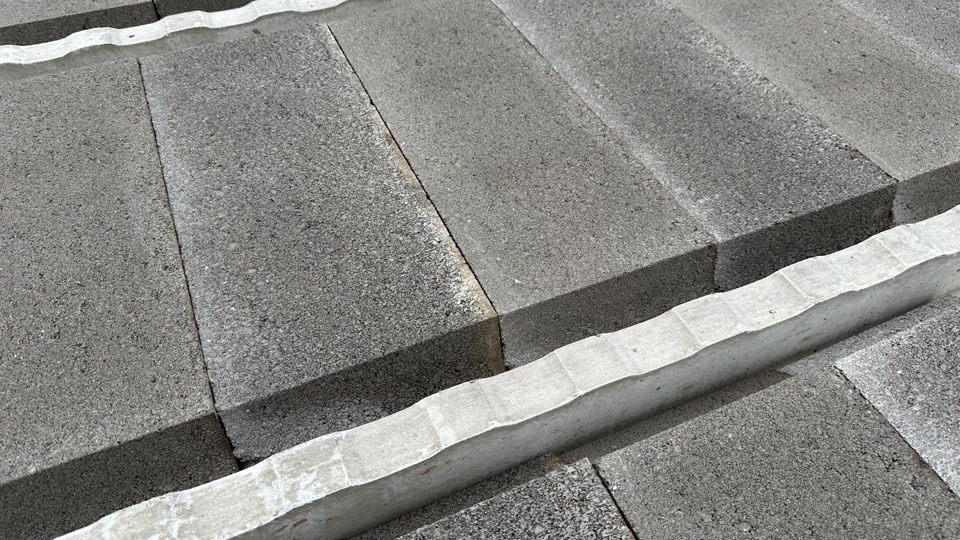
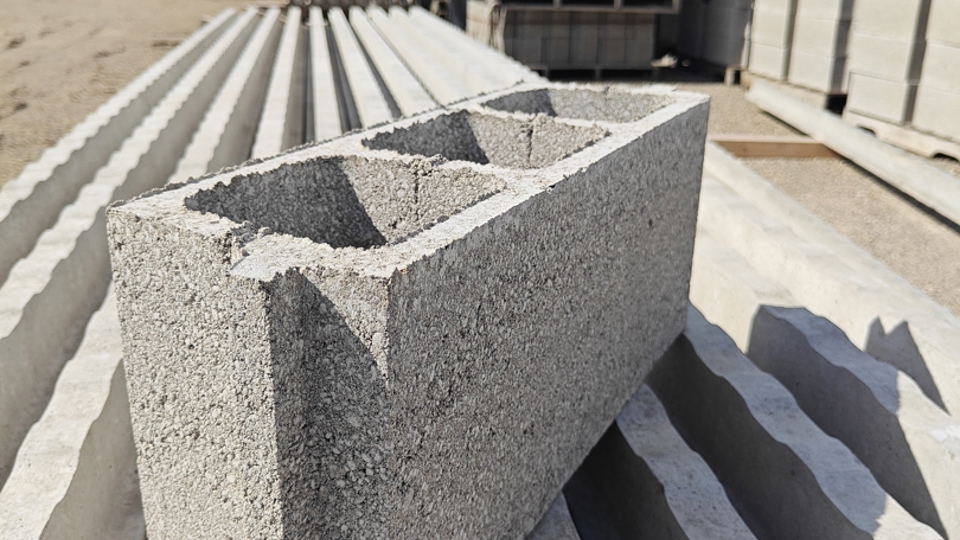
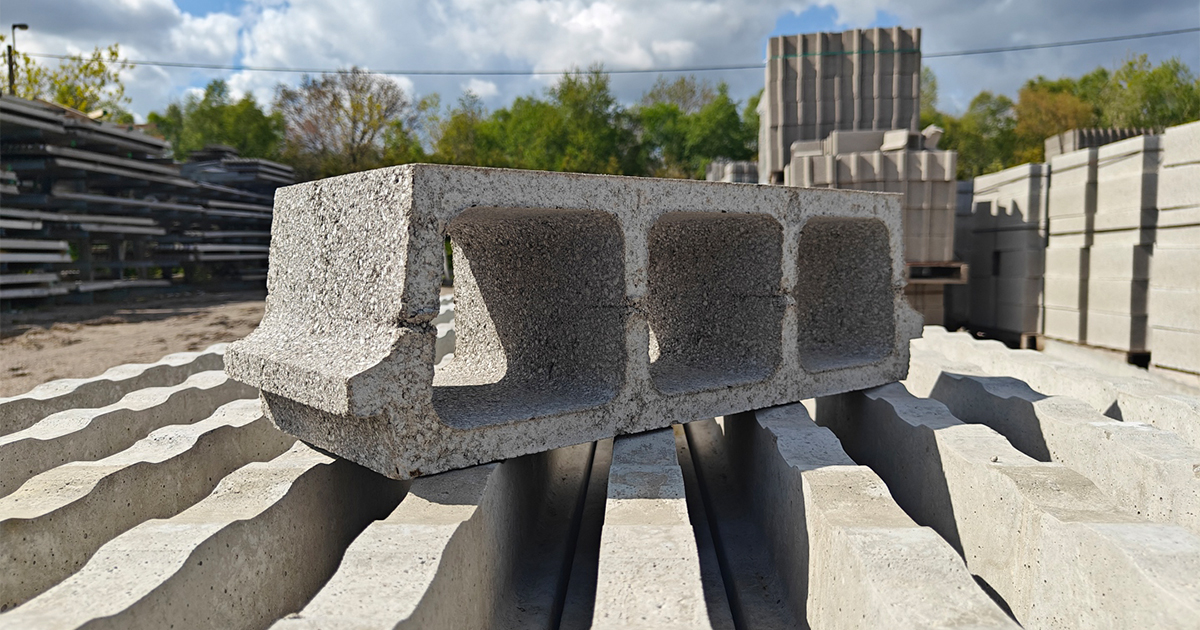
Beams and blocks have been a reliable choice for renovation projects for years. This system consists of prefabricated beams with infill blocks placed between them. The entire construction is then covered with a compression layer, creating a monolithic floor structure. With spans of up to approximately seven meters, this solution is highly sought after for all types of renovation projects.
With Carbstone, Prefer and Masterbloc offer a sustainable alternative to traditional infill blocks. This building material is made from steel slag, a mineral by-product of the steel industry, and contains no cement. This provides a significant environmental advantage, as cement production is responsible for substantial CO₂ emissions.
“Architects do not need to adjust their design approach to achieve a significant reduction in CO₂ emissions,” explains David Nigot, Sales & Methods Director at Prefer. “This makes the transition to more sustainable building materials particularly accessible.”
CO₂ as a binder
Where traditional concrete uses cement as a binder, Carbstone takes a different approach. During the production process, CO₂ is absorbed by the material, causing it to harden. The CO₂ reacts with the calcium in the raw materials to form calcium carbonate, a compound similar to natural limestone.
This technology, developed and patented by Orbix, is the result of years of research and development. Masterbloc and Prefer subsequently applied the technology on an industrial scale, producing and marketing products based on this innovation.
“Normally, CO₂ is considered a problem, but we use it as a raw material,” explains Bjorn Gubbels, CEO of Masterbloc. “We remove the cement from the block’s composition and use CO₂ as a binder. Through carbonation, we obtain a solid building material without cement or natural raw materials. Furthermore, we permanently neutralize this CO₂ within the block itself, giving the material a fundamentally different environmental impact than conventional concrete products.”
Negative CO₂ footprint
Another remarkable feature: the carbonation process does not stop when the block leaves the factory. “Our products continue to absorb CO₂ from the atmosphere and consequently become infinitely strong. Every absorbed CO₂ molecule contributes to the strength of the material. While traditional concrete loses strength after several decades, the Carbstone block actually becomes stronger over time thanks to natural carbonation,” Bjorn explains.
Thanks to an online calculator, architects and construction professionals can use Masterbloc to compare the CO₂ footprint of a Carbstone floor with that of a traditional concrete floor. A 100 m² floor made with Carbstone beams and blocks permanently stores more than 800 kg of CO₂. This makes it possible to gain immediate insight into the impact that material choices can have on the total environmental load of a renovation project.
The same installation, less impact
In addition to the environmental benefits, Carbstone also stands out for its ease of installation. Carbstone blocks are part of the same beam-and-block system that contractors have known and used for years. “We take existing products and make them more sustainable. We don’t want construction workers to have to learn a completely new system. They work as before, but build more sustainably,” David explains.
Besides supplying the components, Masterbloc and Prefer also offer installation support. For each project, an installation plan is drawn up, accurately indicating the correct placement of the beams and blocks. The necessary technical studies and logistical support can also be provided.
“The modularity of the system offers real flexibility on the construction site,” Bjorn emphasizes. “Even if the reality on-site deviates from the plans, the beams and blocks can be easily moved. The system is easily adaptable.”
Circular product, without loss of quality
Carbstone also distinguishes itself from traditional concrete products through its circularity. This material is not only made from slag, a previously unused by-product of the steel industry, but it also contains biogenic CO₂, which is itself recovered from production waste.
At the end of their lifespan, Carbstone building elements can be crushed and reused as raw material for the production of new products based on the same technology. By adding CO₂ again during the production process, a new generation of building materials can be created without any loss of quality. This results in an infinite circular loop, as the final product is made from 100% circular materials.
A future-oriented approach
For architects in particular, the environmental impact of materials is becoming increasingly important. According to Bjorn, Carbstone aligns directly with the introduction of the future M-level indicator, which is currently being developed in Flanders.
“The M-level tool combines the analysis of energy performance, CO₂ emissions, and circularity within a single assessment framework,” he explains. “Carbstone was developed to reduce the CO₂ footprint. Our products can therefore help to meet the future requirements likely to be set by the M-level indicator and improve the overall environmental impact of a building, without requiring fundamental changes to the design or construction.”
According to the manufacturer, buildings that are not adequately prepared for future CO₂ emission and circularity requirements will also decrease in value in the long term, just as buildings with poor energy performance are less attractive on the real estate market.
A renovation solution aimed at 2030
The combination of Carbstone technology and the classic beam-and-block system shows that innovation does not necessarily have to mean a revolution in the construction system. By combining a proven renovation solution with a 100% circular product with a negative CO₂ footprint, a high-quality system is created that is more easily accepted by stakeholders in the sector and addresses both current climate challenges and future sustainability requirements.
“Ninety percent of the people on the construction site don’t even realize they are working with a more sustainable product,” Bjorn concludes. “That is exactly the goal: the same working method, the same performance, but with a significantly greater environmental benefit.” In short, Carbstone offers a solution comparable to traditional concrete, but more sustainable.
Source: Architectura, July 2, 2026